
In today’s fast-paced digital landscape, businesses are continuously seeking innovative ways to engage customers effectively, drive conversions, and foster long-term brand loyalty. With competition growing across every industry, companies must not only attract new customers but also nurture existing relationships to ensure consistent growth and retention. One of the most powerful and results-driven approaches to achieve these goals is through Email Marketing and CRM Management.
By integrating targeted email campaigns with the strategic insights provided by Customer Relationship Management (CRM) systems, businesses can personalize their outreach, automate communication, and track every customer interaction with precision. This powerful combination allows brands to deliver timely, relevant, and value-driven content that resonates with audiences at every stage of the buyer’s journey. Whether it’s welcoming new subscribers, nurturing leads, or re-engaging inactive customers, the synergy between Email Marketing and CRM Management helps create seamless, data-informed marketing experiences that build trust, enhance customer satisfaction, and ultimately drive sustainable business success.
This blog delves into top strategies that can help businesses leverage Email Marketing and CRM Management to achieve better engagement, higher conversion rates, and stronger customer loyalty.
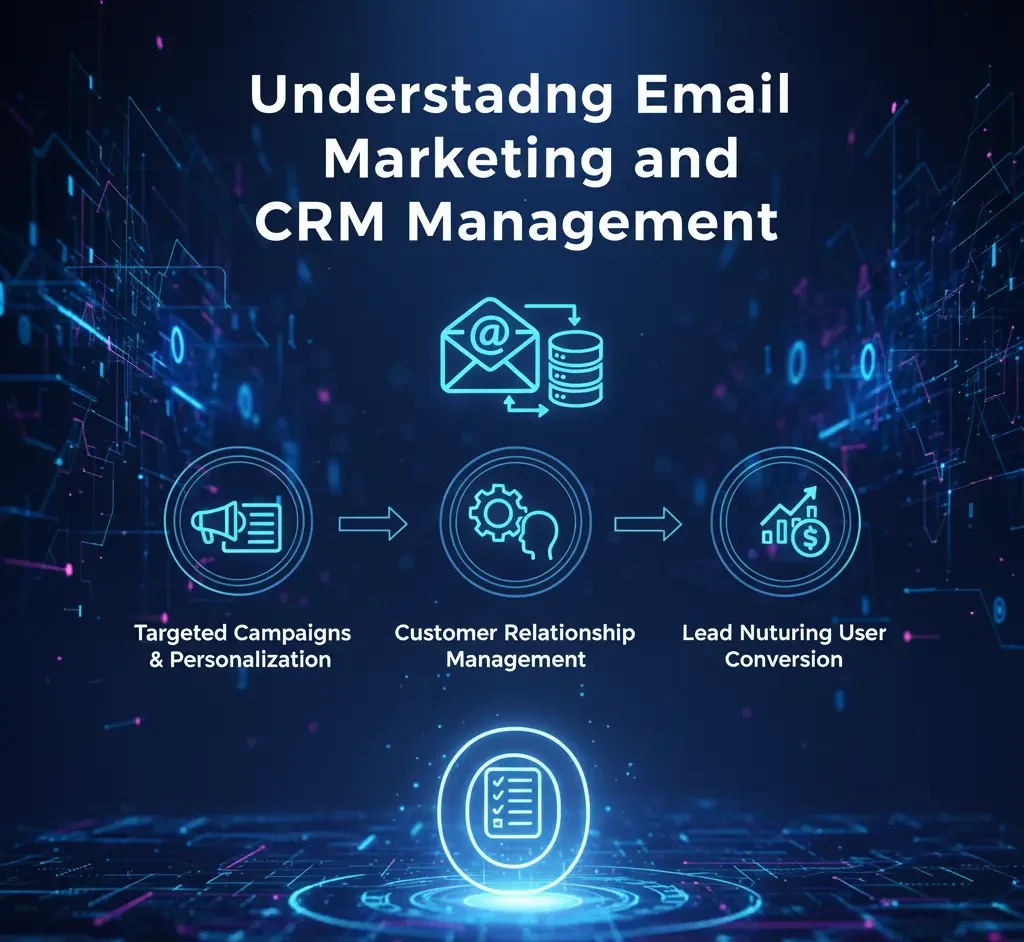
Understanding Email Marketing and CRM Management
Before diving into strategies, it’s crucial to understand what Email Marketing and CRM Management involve.
Email Marketing is the process of sending targeted messages to customers or prospects via email to nurture relationships, promote products or services, and build brand loyalty. On the other hand, CRM Management refers to using CRM software to organize, automate, and synchronize customer interactions, sales processes, and marketing campaigns.
When combined, Email Marketing and CRM Management create a cohesive approach to personalized communication. CRM systems store detailed customer data that informs email marketing campaigns, ensuring that the right message reaches the right audience at the right time.
1. Segment Your Audience for Personalized Campaigns
One of the most effective strategies in Email Marketing and CRM Management is audience segmentation. Instead of sending generic emails to everyone on your list, segment your audience based on demographics, behavior, purchase history, and engagement level.
For example:
- Segment by purchase behavior: Identify customers who frequently purchase certain products and tailor campaigns promoting related products.
- Segment by engagement level: Send re-engagement emails to inactive subscribers while rewarding active subscribers with exclusive offers.
CRM systems make segmentation seamless by automatically categorizing your audience based on various parameters, allowing your Email Marketing and CRM Management strategy to be highly targeted.
2. Automate Your Email Campaigns
Automation is a cornerstone of successful Email Marketing and CRM Management. Automated email workflows ensure that your customers receive timely, relevant, and personalized messages without manual intervention.
Some automation examples include:
- Welcome emails for new subscribers
- Cart abandonment reminders to encourage purchase completion
- Birthday or anniversary emails to build emotional connections
Automation not only saves time but also ensures consistency, enhancing the effectiveness of your Email Marketing and CRM Management efforts.
3. Craft Compelling Subject Lines
Even the best email content fails if the subject line doesn’t capture attention. In Email Marketing and CRM Management, the subject line is your first impression.
Tips for creating compelling subject lines:
- Keep it short and actionable
- Use personalization (e.g., including the recipient’s name)
- Create curiosity or urgency
- Avoid spammy words
By combining CRM data with these tactics, your emails will have a higher open rate, directly enhancing the impact of your Email Marketing and CRM Management strategy.
4. Personalize Content for Higher Engagement
Personalization goes beyond inserting the recipient’s name. In Email Marketing and CRM Management, it involves tailoring the email content based on the customer’s preferences, past behavior, and buying journey.
Examples of personalization include:
- Recommending products based on previous purchases
- Sharing content related to the recipient’s interests
- Providing customized offers or discounts
CRM systems store valuable customer insights, making personalization easier and more effective. Personalized campaigns consistently outperform generic emails in engagement and conversion metrics.
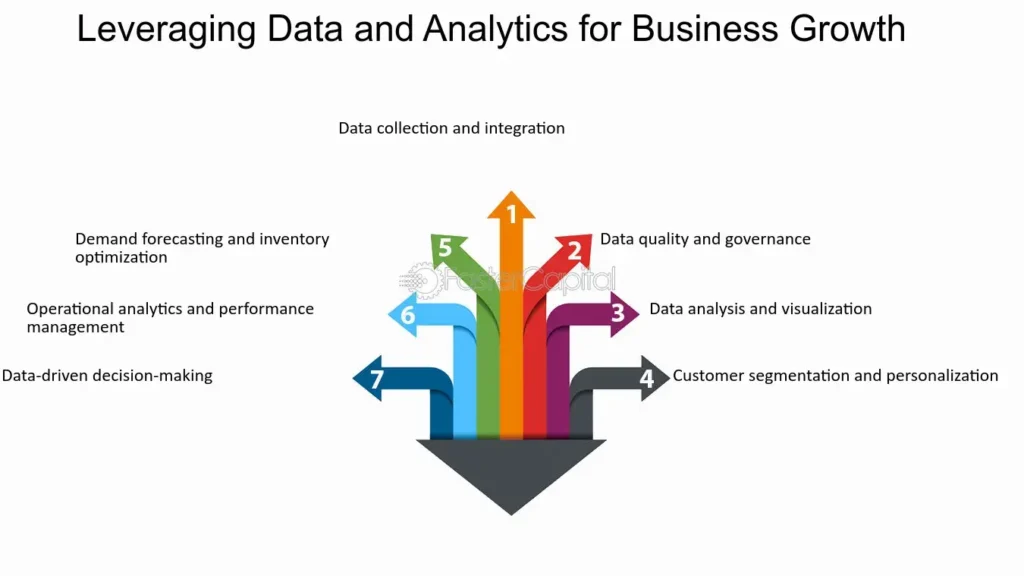
5. Leverage Data Analytics for Optimization
A successful Email Marketing and CRM Management strategy relies heavily on data analytics. Tracking metrics such as open rates, click-through rates, conversions, and unsubscribe rates can help refine your campaigns.
Key insights to track include:
- Which subject lines generate the highest open rates
- Which email content drives the most clicks
- The ideal frequency and timing of emails
CRM platforms often integrate with email marketing tools to provide comprehensive analytics, enabling businesses to continually optimize their Email Marketing and CRM Management efforts for maximum ROI.
6. Maintain a Clean and Updated Email List
Deliverability is a critical factor in Email Marketing and CRM Management. Sending emails to outdated or incorrect addresses can hurt your sender reputation and reduce engagement.
Best practices include:
- Regularly removing inactive or bounced email addresses
- Using double opt-in methods to ensure valid subscriptions
- Updating customer information in your CRM system
By keeping your email list clean and accurate, you enhance the efficiency of your Email Marketing and CRM Management, ensuring messages reach the right audience.
7. Integrate Multi-Channel Marketing
Modern Email Marketing and CRM Management strategies often extend beyond email. Integrating your campaigns with other channels such as social media, SMS, and website messaging creates a unified customer experience.
Benefits include:
- Reinforcing your message across multiple touchpoints
- Reaching customers on their preferred platform
- Driving higher engagement through consistent messaging
CRM systems play a crucial role in managing multi-channel interactions, ensuring your Email Marketing and CRM Management remains cohesive and effective.
8. Test and Optimize Regularly
Continuous testing is vital in Email Marketing and CRM Management. A/B testing allows you to experiment with different subject lines, email copy, images, and call-to-action buttons to identify what resonates most with your audience.
Tips for effective testing:
- Test one variable at a time for accurate results
- Use CRM analytics to measure performance
- Implement winning strategies across campaigns
Optimization ensures that your Email Marketing and CRM Management strategy evolves with changing customer preferences, keeping your campaigns relevant and impactful.
9. Focus on Mobile Optimization
With the majority of emails being opened on mobile devices, mobile optimization is a key aspect of Email Marketing and CRM Management. Emails that are not mobile-friendly can lead to lower engagement and higher bounce rates.
Best practices for mobile optimization:
- Use responsive design templates
- Keep subject lines and text concise
- Optimize images for faster loading
By prioritizing mobile-friendly emails, your Email Marketing and CRM Management efforts can reach a broader audience effectively.
10. Ensure Compliance with Privacy Regulations
Privacy regulations like GDPR, CAN-SPAM, and CCPA have transformed Email Marketing and CRM Management. Ensuring compliance is not just legal but also builds trust with your audience.
Compliance strategies include:
- Obtaining explicit consent before sending emails
- Providing easy unsubscribe options
- Keeping customer data secure in your CRM
Adhering to these practices enhances your credibility and ensures long-term success in Email Marketing and CRM Management.
11. Use Customer Feedback to Refine Strategies
Customer feedback is a goldmine for Email Marketing and CRM Management. Regularly collecting and analyzing feedback helps tailor your campaigns to better meet customer needs.
Methods to gather feedback:
- Include short surveys in emails
- Monitor replies and social media mentions
- Track behavior through CRM analytics
Using feedback to inform your campaigns ensures that your Email Marketing and CRM Management remains customer-centric and highly effective.
Conclusion
Email Marketing and CRM Management are indispensable tools in modern business strategy. By implementing the strategies outlined above—segmentation, automation, personalization, analytics, multi-channel integration, and continuous optimization—you can create campaigns that not only engage your audience but also drive measurable results.
In a competitive digital landscape, businesses that leverage Email Marketing and CRM Management effectively gain a significant advantage, fostering stronger customer relationships, higher conversion rates, and sustained growth.
Investing in the right tools, staying compliant, and continuously refining your approach will ensure your Email Marketing and CRM Management strategy remains robust, adaptable, and successful.